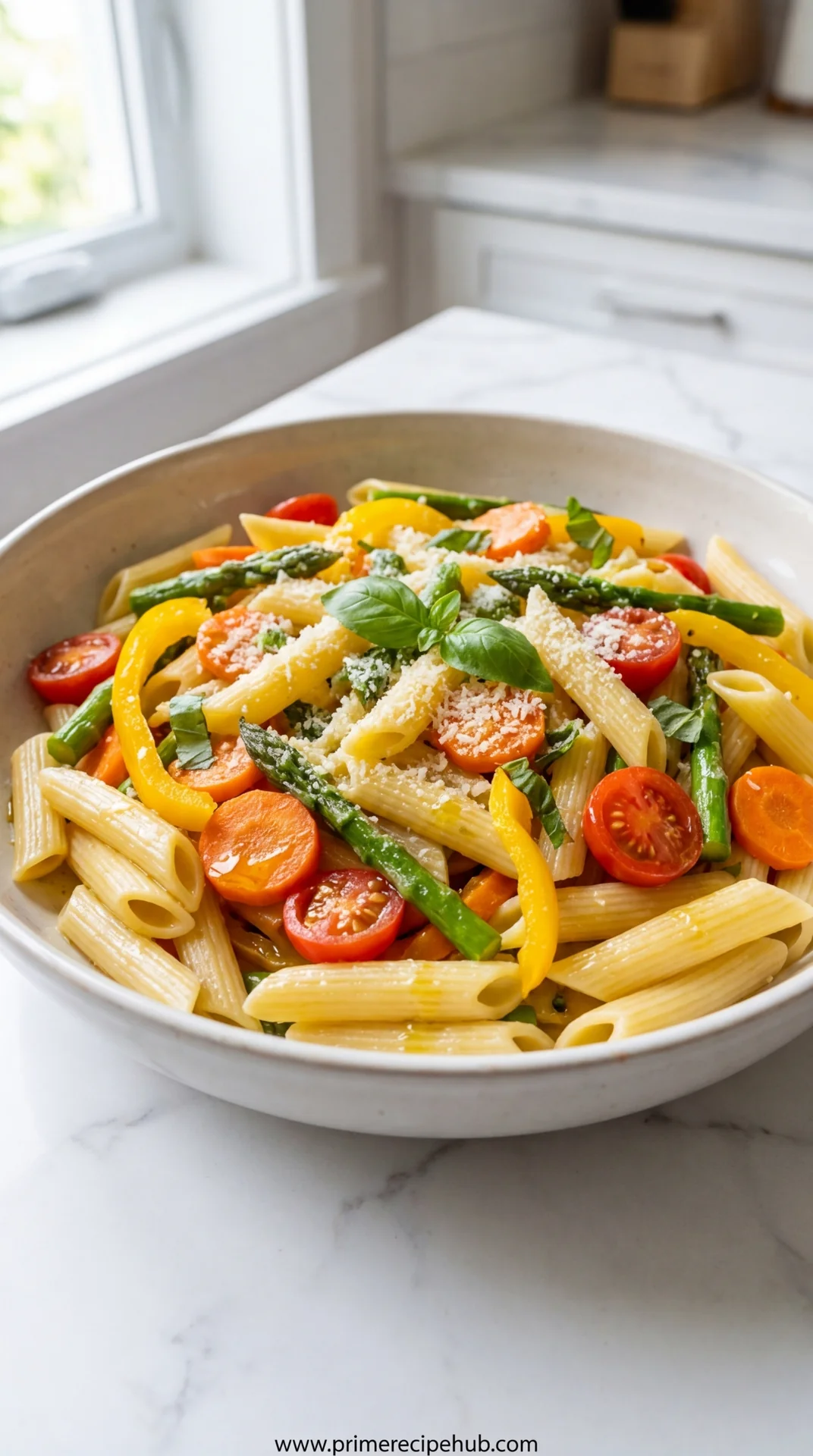
Pasta Primavera emerged in the United States after World War II, when chefs sought to showcase the bounty of fresh vegetables that arrived with the new season. It quickly became a symbol of healthful Italian‑American cooking, marrying the simplicity of pasta with the vivid colors of spring produce. Today, the dish remains a beloved staple, celebrated for its ease and its ability to turn the simplest ingredients into a comforting, nutritious meal.
Why You'll Love It
-
- Bursting with colorful, fresh vegetables
-
- Quick and easy weeknight dinner
-
- Light yet filling, perfect for spring
-
- Flexible for any dietary tweaks
"The flavors burst like a garden in spring—so fresh and satisfying!"
Essential Ingredient Guide
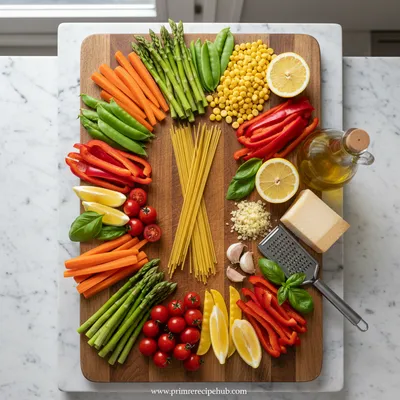
- Pasta (preferably linguine or farfalle): Choose a shape that holds sauce well; look for firm, bronze‑extruded noodles for better texture.
- Mixed spring vegetables (bell pepper, zucchini, peas, carrots): Pick crisp, bright vegetables; trim ends and slice uniformly for even cooking.
- Fresh basil and parsley: Adds aromatic lift; tear by hand to keep leaf edges intact.
- Garlic and olive oil: Sauté gently to release fragrance without browning too hard.
- Lemon juice: A splash adds brightness and balances the richness of oil.
- Parmesan cheese (optional): Grated fresh adds a salty finish; omit for a vegan version.
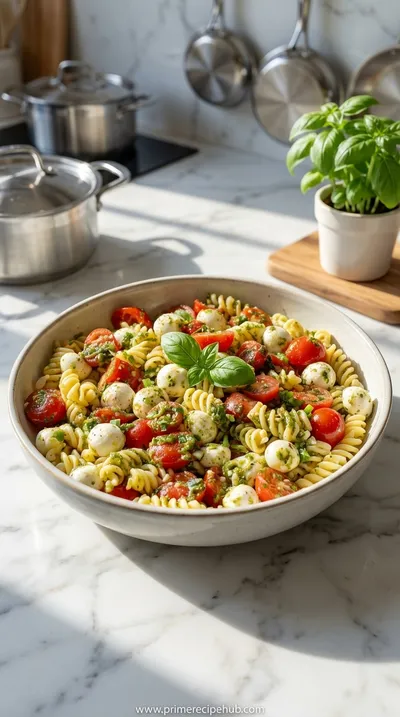
Complete Cooking Process
-
Ingredient Readiness:
Wash and trim all vegetables, then slice them into bite‑size pieces; bring pasta to a boil.
-
Flavor Development:
Sauté garlic in olive oil, then add vegetables, allowing them to soften while retaining a slight crunch.
-
Texture Control:
Cook pasta al dente, reserve a cup of pasta water, and combine with vegetables to create a light coating.
-
Finishing Touches:
Stir in lemon juice, fresh herbs, and a sprinkling of Parmesan; adjust with pasta water for silkiness.
-
Serving Timing:
Plate immediately while warm, so the sauce clings to each strand and the herbs stay vibrant.
-
Cook vegetables just until tender‑crisp to preserve color and snap.
-
Reserve pasta water; its starch helps bind the sauce without butter.
-
Season in layers: a pinch of salt with the veggies, then a final taste after adding lemon.
Pro Tips
Well, these little adjustments make a big difference. I often find that a minute less on the vegetables keeps them lively, and the starch‑rich water turns a simple oil‑based sauce into something silky. So, trust your senses, and let the dish come together gently. It’s all about that quiet, steady rhythm in the kitchen.
 Healthy & Vegetarian
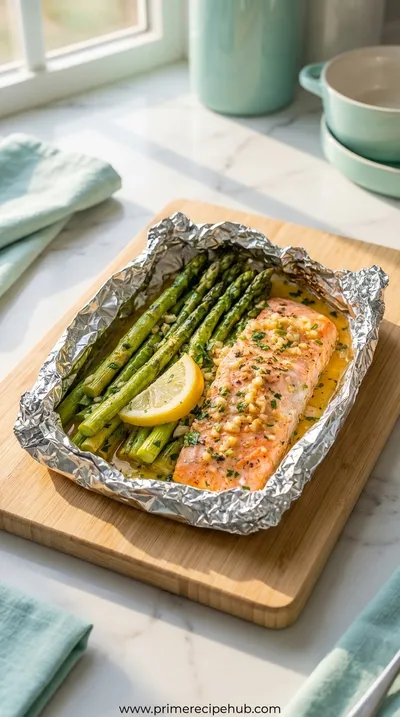
Baked Salmon in Foil Packs with Asparagus
A simple, healthy one‑pan dinner: salmon and asparagus baked together in buttery foil.
The essence of the dish:
A harmonious blend of pasta and spring vegetables, lightly tossed in garlic‑infused olive oil and brightened with lemon, creates a dish that feels both nourishing and celebratory.
A fun fact or historical angle:
The name "Primavera" simply means “spring” in Italian, and the dish rose to fame in the 1970s as American diners craved healthier, vegetable‑forward meals.
Flavor or sensory focus:
You’ll notice the crisp snap of carrots, the tender pop of peas, and the fragrant lift of fresh basil, all underpinned by a subtle garlic‑olive‑oil sheen.
You Must Know
-
Use pasta water to bind the sauce
-
Don’t overcook the vegetables
-
Finish with a splash of lemon for brightness
Frequently Asked Questions
→ Can I use gluten‑free pasta?
Yes, substitute any gluten‑free shape; just follow the package timing to keep it al dente.
→ What if I don’t have fresh herbs?
Dried herbs can work in a pinch, but add them earlier and use less; fresh herbs provide brighter flavor.
→ How do I make this vegan?
Omit Parmesan and consider adding toasted pine nuts for a nutty finish.
→ Can I freeze leftovers?
It’s best enjoyed fresh, but you can refrigerate for up to two days; reheat gently with a splash of broth.
→ What vegetables work best?
Bell peppers, zucchini, peas, carrots, and asparagus are classic; feel free to swap in seasonal produce.
→ Should I add protein?
Grilled chicken, shrimp, or a sprinkle of toasted chickpeas make a satisfying addition.
Nutrition Facts
per serving
420
Calories
12g
Protein
60g
Carbs
14g
Fat
Taste Profile
Bright, fresh, and lightly seasoned
Ingredient Substitutions
Don't have an ingredient? Try these alternatives
If using zucchini noodles, reduce cooking time to 2‑3 minutes.
Provides a cheesy flavor while keeping the dish dairy‑free.
Recipe Variations
Try these delicious twists on the original
Spicy Version
Add a pinch of red‑pepper flakes and a drizzle of sriracha for a gentle kick.
Mediterranean Style
Stir in Kalamata olives, sun‑dried tomatoes, and crumbled feta for a salty, tangy twist.
Common Mistakes to Avoid
Learn from others' mistakes for perfect results
- Overcooking the vegetables, which makes them mushy.
- Not reserving pasta water, leading to a dry final dish.
- Adding lemon juice too early, causing it to taste cooked.
Meal Prep & Storage
Make Ahead Tips
You can chop all vegetables and store them in a sealed container in the refrigerator for up to 24 hours. The pasta can be cooked ahead and tossed with a little olive oil to prevent sticking.
Leftover Ideas
Reheat gently in a skillet over low heat, adding a splash of broth or water to revive the sauce.
Perfect Pairings
Serve this with...
Cooking Timeline
Gather and prep all vegetables; bring a pot of water to a boil.
Cook pasta until al dente, reserving 1 cup of pasta water.
Sauté garlic, then add carrots, bell pepper, and zucchini; cook until just tender.
Add snap peas and tomatoes, season, then combine pasta with vegetables.
Finish with lemon juice, herbs, Parmesan, adjust seasoning, and serve.
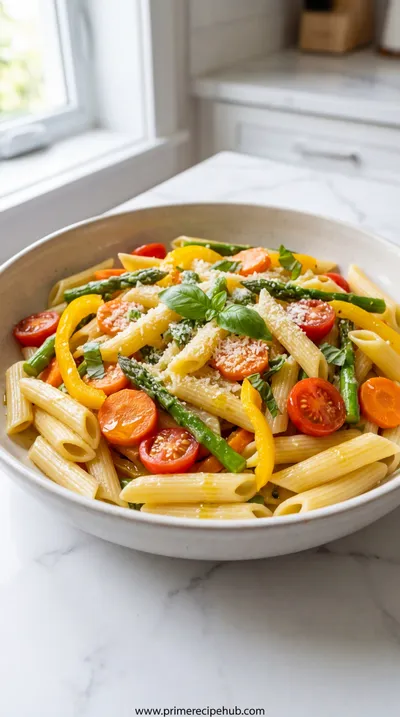
Pasta Primavera – Fresh Spring Vegetable Pasta
Enjoy a light, colorful Pasta Primavera packed with fresh vegetables and al dente noodles for a healthy, satisfying meal. This dish brings the brightness of spring to your table, with crisp bell peppers, tender green beans, and a gentle garlic‑olive‑oil sauce that lets each ingredient shine.
Timing
Prep Time
15 Minutes
Cook Time
20 Minutes
Total Time
35 Minutes
Recipe Details
Ingredients
Main Ingredients
-
01
12 oz linguine or farfalle pasta
-
02
1 cup cherry tomatoes, halved
-
03
1 cup snap peas
-
04
1 medium carrot, thinly sliced
-
05
1 small zucchini, half‑moon sliced
-
06
1 red bell pepper, julienned
-
07
2 cloves garlic, minced
-
08
3 tbsp extra‑virgin olive oil
-
09
Juice of 1 lemon
-
10
¼ cup fresh basil, torn
-
11
¼ cup fresh parsley, chopped
-
12
¼ cup grated Parmesan cheese (optional)
-
13
Salt and freshly ground black pepper to taste
Instructions
Bring a large pot of salted water to a boil, add the pasta, and cook until al dente, about 9‑10 minutes. Reserve 1 cup of the cooking water, then drain.
While the pasta cooks, heat the olive oil in a large skillet over medium heat. Add the minced garlic and sauté gently until fragrant, about 30 seconds—watch it so it doesn’t brown.
Add the carrot, bell pepper, and zucchini to the skillet. Toss and cook for 3‑4 minutes until they begin to soften but still retain a little snap.
Stir in the snap peas and cherry tomatoes, cooking another 2 minutes. Season with a pinch of salt and pepper.
Add the drained pasta to the skillet, drizzle with lemon juice, and toss everything together. If the mixture seems dry, add a splash of the reserved pasta water, a little at a time, until a light sauce coats the noodles.
Remove from heat, fold in the fresh basil, parsley, and Parmesan (if using). Give the pasta one final gentle toss, adjust seasoning, and serve immediately.
Notes & Tips
-
1
You can prep the vegetables ahead of time and store them in the fridge for up to 2 hours.
-
2
If you prefer a richer sauce, add a tablespoon of butter along with the olive oil.
-
3
For a spicier version, sprinkle a pinch of red‑pepper flakes when you add the garlic.
Tools You'll Need
-
Large pot
-
Colander
-
Large skillet
-
Wooden spoon
-
Chef’s knife
-
Cutting board
Must-Know Tips
-
Don’t overcook the vegetables; you want them crisp‑tender.
-
Reserve pasta water; it’s the secret to a silky sauce.
-
Taste and adjust seasoning at each stage for balanced flavor.
Professional Secrets
-
Use bronze‑extruded pasta for better sauce adhesion.
-
Finish the dish off the heat to keep herbs bright.
-
Add lemon juice at the end to preserve its fresh aroma.

Recipe by
Sophia BennettSophia Bennett represents the artistic heart of sweet baking with her elegant cakes, delicate pastries, and celebration desserts. She enjoys crafting ...
Get Delicious Recipes Weekly
Join 25,000+ home cooks getting our best recipes straight to their inbox.
Free forever • No spam • Unsubscribe anytime