Why You'll Love It
- - Packed with a rainbow of nutrient-rich vegetables
- - Naturally vegetarian and filling thanks to the kidney beans
- - incredibly versatile; you can swap veggies based on what's in your fridge
- - The flavors deepen and improve if you let it sit overnight
"This soup is like a warm hug in a bowl. It's hearty enough for a main course but feels so light and clean."
Essential Ingredient Guide
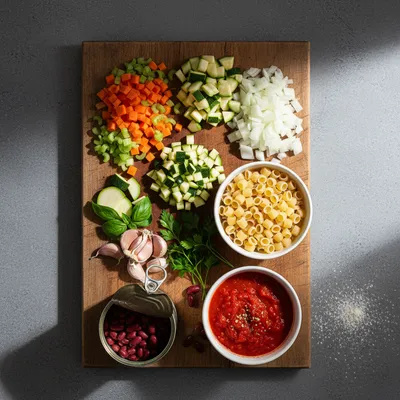
- Kidney Beans: They provide the creamy texture and protein. Rinse them well to remove the metallic canned taste.
- Diced Tomatoes: Use fire-roasted tomatoes if you can find them; they add a subtle smokiness that mimics a slow fire.
- Small Pasta: Ditalini or macaroni work best. Cook them separately if you plan on having leftovers to prevent mushiness.
- Dried Oregano: A pinch of oregano brings that classic earthy scent that defines Italian home cooking.
- Lemon Juice: A squeeze at the very end wakes up all the heavy vegetable flavors and adds brightness.
- Olive Oil: Use a good extra-virgin oil for sautéing the aromatics to build a rich base.
Complete Cooking Process
-
Ingredient Readiness:
Everything should be chopped into similar sizes. I like my carrots and celery to be small, uniform cubes so they cook evenly and fit perfectly on a spoon. Make sure your beans are drained and rinsed until the water runs clear.
-
Flavor Development:
The magic happens in the first ten minutes. Sautéing the onions, carrots, and celery until they are soft and translucent creates a sweet, aromatic foundation. This is where the vegetable soup base truly begins to bloom.
-
Texture Control:
The timing of the vegetables is key. Harder vegetables go in first, while spinach or kale should only be stirred in at the very end so they stay vibrant and don't turn a dull brown.
-
Finishing Touches:
Right before serving, I always add a bit of fresh parsley and a squeeze of lemon. It's a small step, but it changes the whole experience from a heavy stew to a refreshing soup.
-
Serving Timing:
Serve immediately while steaming hot, but if you have the patience, letting it simmer on low for an extra twenty minutes allows the starch from the pasta to slightly thicken the broth.
- Sauté the tomato paste for two minutes before adding liquid to remove the raw taste.
- Use a low-sodium broth so you can control the salt level yourself.
- If the soup is too thick, add a splash of water or more broth to loosen it up.
- Add a Parmesan rind to the pot while simmering for an incredible savory depth.
Pro Tips
I remember one time I forgot the lemon juice, and the soup felt just a bit... flat. It's funny how one tiny bit of acid can make the carrots taste sweeter and the beans taste creamier. It's those little things that make cooking feel like art. Also, don't be afraid to let the vegetables soften. Some people like a crunch, but in a cozy dinner, I prefer everything to be tender and melting.
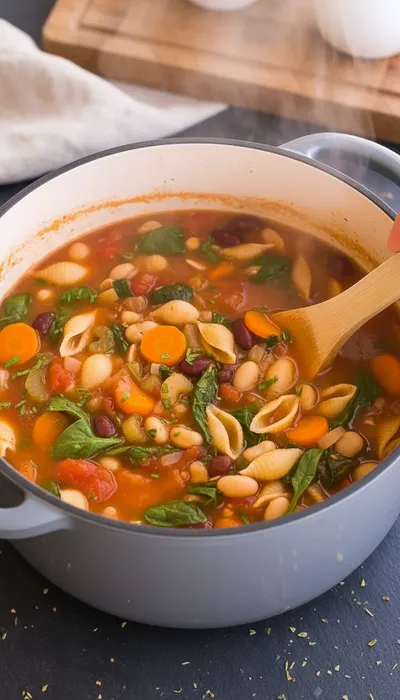
The essence of the dish:
A fun fact or historical angle:
Flavor or sensory focus:
You Must Know
- Pasta absorbs liquid—if storing for later, store pasta separately.
- Fresh herbs are always better than dried if you have them on the windowsill.
- Avoid boiling the soup vigorously; a gentle simmer keeps the veggies intact.
Frequently Asked Questions
→ Can I make this in a slow cooker?
Yes, absolutely. Put everything except the pasta and spinach in the crockpot on low for 6-8 hours. Stir in the pasta and greens during the last 30 minutes.
→ What other beans can I use?
Cannellini beans or chickpeas are wonderful alternatives. They change the flavor slightly but keep the heartiness.
→ How do I keep the pasta from getting soggy?
The best way is to boil your pasta separately and add a scoop to each bowl before pouring the soup over it.
→ Can I freeze minestrone soup?
Yes, but I highly recommend freezing it without the pasta. Add fresh pasta when you reheat the soup for the best texture.
→ Is this soup gluten-free?
As written, no, because of the pasta. However, you can easily use a gluten-free pasta or replace the pasta with extra beans or diced potatoes.
→ What if I don't have vegetable broth?
You can use water with a bit of extra salt and a tablespoon of soy sauce or a bouillon cube for flavor.
Chef's Tips
If you're making this for the week, skip the pasta in the pot and add it to individual servings.,For a richer flavor, stir in a tablespoon of butter at the very end.,Feel free to add a handful of chopped cabbage or turnips for a more rustic, winter-style soup.
Nutrition Facts
per serving
280
Calories
14g
Protein
34g
Carbs
7g
Fat
Taste Profile
A savory, earthy balance of garden vegetables and rich legumes.
Ingredient Substitutions
Don't have an ingredient? Try these alternatives
White beans make the soup look lighter and taste slightly nuttier.
Adds a different chew and more protein; cook separately.
Recipe Variations
Try these delicious twists on the original
Creamy Minestrone
Blend one cup of the cooked beans and stir them back in for a thicker, creamier consistency.
Hearty Meat Version
For those who aren't vegetarian, you could try a beef soup style by adding browned ground beef or beef broth.
Common Mistakes to Avoid
Learn from others' mistakes for perfect results
- Adding pasta too early, which leads to a mushy texture.
- Skipping the lemon juice, which leaves the soup tasting flat.
- Overcooking the spinach until it loses its bright color.
Meal Prep & Storage
Make Ahead Tips
You can prepare the vegetable base and broth up to 2 days in advance. Just add the pasta, peas, and spinach when you are ready to serve.
Leftover Ideas
Reheat in a pot over medium heat. Since pasta absorbs liquid, you will likely need to add 1/4 cup of water or broth to bring it back to the right consistency.
Perfect Pairings
Serve this with...
Cooking Timeline
Prep all vegetables and rinse beans.
Sauté onion, carrots, and celery until softened.
Add tomatoes, broth, and bay leaf; bring to simmer.
Add zucchini and kidney beans; cook until tender.
Add pasta and peas, then finish with spinach and lemon.
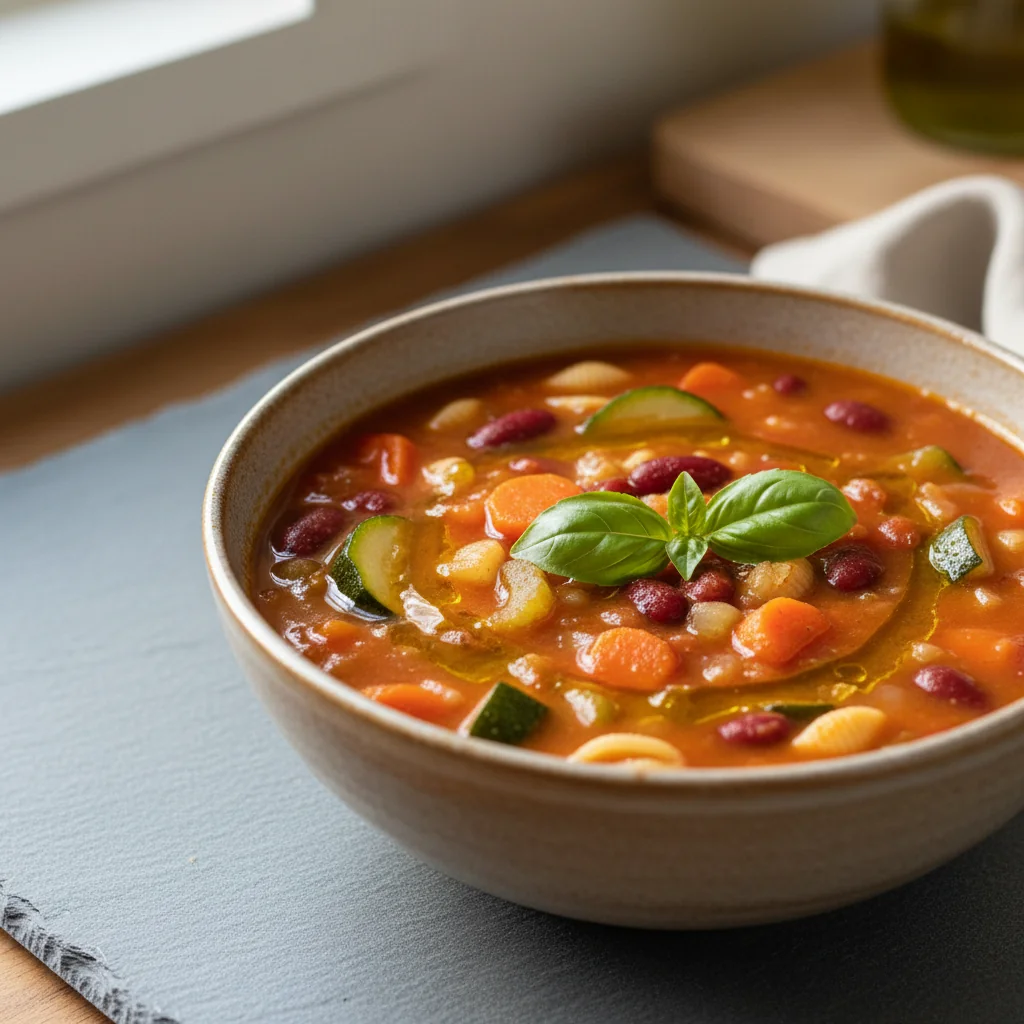
Easy Minestrone Soup Recipe for Healthy Dinners
A comforting, garden-fresh minestrone soup filled with hearty beans, tender vegetables, and a touch of pasta for a wholesome meal.
Timing
Prep Time
20 Minutes
Cook Time
30 Minutes
Total Time
50 Minutes
Recipe Details
Ingredients
The Base
- 01 2 tbsp extra-virgin olive oil
- 02 1 medium onion, finely diced
- 03 2 carrots, sliced into half-moons
- 04 2 celery stalks, chopped
- 05 3 cloves garlic, minced
Hearty Additions
- 01 1 can (15 oz) kidney beans, drained and rinsed
- 02 1 can (14.5 oz) diced tomatoes
- 03 1 cup frozen peas
- 04 1 medium zucchini, diced
- 05 1/2 cup small pasta (ditalini or shells)
Liquid & Seasoning
- 01 6 cups vegetable broth
- 02 1 tsp dried oregano
- 03 1 bay leaf
- 04 Salt and black pepper to taste
- 05 1 tbsp lemon juice
- 06 2 cups fresh spinach or kale, chopped
Instructions
Warm the olive oil in a large pot over medium heat. Add your onion, carrots, and celery. Sauté them slowly for about 6 to 8 minutes until the onions are translucent and the carrots have softened just a bit.
Stir in the minced garlic and dried oregano. Cook for just a minute—long enough for the scent to fill the air, but be careful not to let the garlic brown too much.
Pour in the diced tomatoes with their juices and the vegetable broth. Add the bay leaf. Bring the mixture to a gentle boil, then turn the heat down to low and let it simmer for about 10 minutes.
Add the diced zucchini and kidney beans. Let these simmer for another 10 minutes. You want the zucchini to be tender but not falling apart.
Stir in the pasta and frozen peas. Cook for about 8-10 minutes, or until the pasta is al dente. I usually taste a piece of pasta at this point to make sure it's just right.
Turn off the heat. Stir in the fresh spinach and lemon juice. The residual heat will wilt the spinach in seconds, keeping it a bright, pretty green.
Remove the bay leaf and season with salt and pepper. Taste it one last time—sometimes it needs a pinch more salt to make the vegetables sing.
Notes & Tips
- 1 If you're making this for the week, skip the pasta in the pot and add it to individual servings.
- 2 For a richer flavor, stir in a tablespoon of butter at the very end.
- 3 Feel free to add a handful of chopped cabbage or turnips for a more rustic, winter-style soup.
Tools You'll Need
-
Large heavy-bottomed pot or Dutch oven
-
Chef's knife
-
Cutting board
-
Wooden spoon for stirring
-
Measuring cups and spoons
-
Ladle for serving
Must-Know Tips
- Don't rush the sautéing—those first few minutes build the foundation of the flavor.
- Rinse your beans thoroughly to keep the broth clear and clean tasting.
- Add greens at the very end to preserve their nutrients and color.
Professional Secrets
- Searing the vegetables slightly before adding liquid creates a deeper umami profile.
- Using a mix of fresh and dried herbs provides both base depth and bright top notes.
- A splash of lemon juice acts as a natural flavor enhancer, mimicking the effect of salt.

Recipe by
Hannah BrooksHannah Brooks focuses on nutritious baked meals that feature rice, quinoa, oats, and other wholesome grains. She develops creative casseroles, baked g ...
Get Delicious Recipes Weekly
Join 25,000+ home cooks getting our best recipes straight to their inbox.
Free forever • No spam • Unsubscribe anytime