Why You'll Love It
- - Bright herbal flavor balanced by creamy richness
- - Quick to assemble on busy weeknights
- - Versatile – pairs with any pasta shape
- - Uses pantry staples plus fresh basil
*"The sauce is so smooth and vibrant, it turned my pantry pasta into a restaurant‑worthy dish!"*
Essential Ingredient Guide
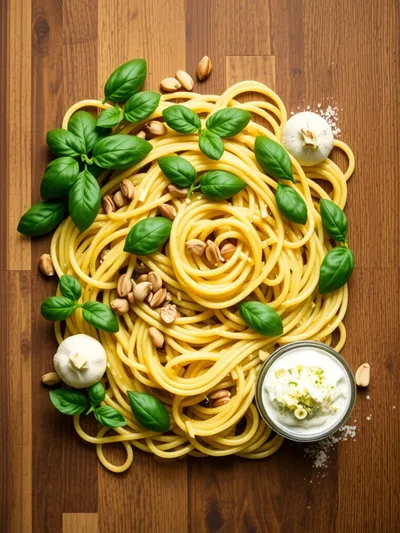
- Fresh basil leaves: Choose dark green, aromatic leaves; they give the sauce its signature fragrance.
- Pine nuts: Toast lightly for a nutty depth; they add gentle crunch even after blending.
- Heavy cream: Full‑fat cream creates that silky mouthfeel; you can substitute half‑and‑half for a lighter touch.
- Parmesan cheese: Freshly grated adds salty umami and helps bind the sauce.
- Lemon juice: A splash brightens the green and balances the richness.
- Garlic: Just one clove; too much can overwhelm the herbaceous notes.
Complete Cooking Process
-
Ingredient Readiness:
Wash basil, toast pine nuts, grate cheese, and measure cream before you start.
-
Flavor Development:
Sauté garlic gently, then blend with basil and nuts to release aromatic oils.
-
Texture Control:
Add cream slowly while the processor runs to keep the sauce smooth and prevent a grainy texture.
-
Finishing Touches:
Season with lemon juice, salt, and pepper; a final drizzle of olive oil adds shine.
-
Serving Timing:
Toss the sauce with hot pasta right after draining; the heat finishes cooking the sauce.
- Reserve a cup of pasta water; a splash can loosen the sauce if needed.
- Use a food processor for a uniform texture, but stop short of pureeing.
- Add a pinch of red pepper flakes for a subtle heat.
- Serve immediately; the sauce thickens as it cools.
Pro Tips
I often find that the little details make the difference. A splash of the starchy water can transform a thick sauce into a glossy coat that clings perfectly. And if you’re cooking for guests, a quick garnish of toasted pine nuts adds a lovely crunch that invites conversation. So, take a breath, enjoy the aroma, and let the sauce bring a sense of calm to your table.
The essence of the dish:
A fun fact or historical angle:
Flavor or sensory focus:
You Must Know
- Use fresh basil for vivid color
- Toast nuts for depth
- Add lemon at the end
- Reserve pasta water for adjustment
Frequently Asked Questions
→ Can I use spinach instead of basil?
Yes, blend fresh spinach with the same nuts and cream for a milder green sauce.
→ How long does the sauce keep?
Store in an airtight container in the fridge for up to three days; reheat gently and add a splash of water.
→ Should I add cheese before or after blending?
Add Parmesan after blending, then stir in while the sauce is still warm for a smoother texture.
→ Is this sauce gluten‑free?
The sauce itself is gluten‑free; just pair with gluten‑free pasta if needed.
→ Can I freeze the sauce?
Yes, freeze in a sealed bag for up to two months; thaw and whisk in a little cream before using.
→ What pasta shape works best?
Long strands like linguine or fettuccine catch the sauce well, but any shape will do.
Chef's Tips
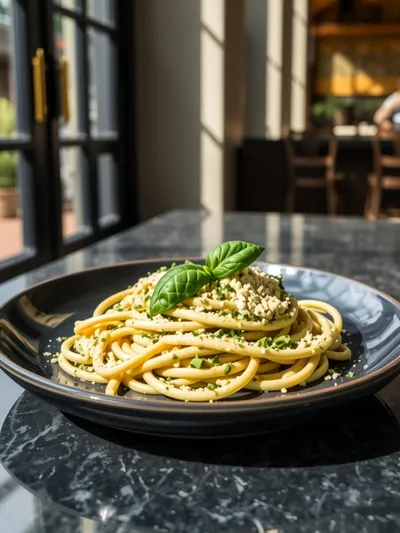
If the sauce thickens too quickly, a splash of the reserved pasta water will loosen it.,For extra nuttiness, sprinkle a few toasted pine nuts on top before serving.,A pinch of red pepper flakes adds a gentle warmth without overpowering the herbaceous flavor.
Nutrition Facts
per serving
420
Calories
12g
Protein
38g
Carbs
22g
Fat
Taste Profile
Herbaceous and buttery with a gentle nutty finish
Ingredient Substitutions
Don't have an ingredient? Try these alternatives
Toast lightly; walnuts add a deeper flavor.
Coconut cream adds a subtle tropical note.
Recipe Variations
Try these delicious twists on the original
Spicy Version
Add red pepper flakes and a dash of hot sauce for a gentle kick.
Mediterranean Style
Stir in chopped sun‑dried tomatoes, kalamata olives, and crumbled feta.
Common Mistakes to Avoid
Learn from others' mistakes for perfect results
- Over‑blending the pesto, which can turn it bitter.
- Adding cream too quickly, leading to a grainy texture.
- Forgetting to reserve pasta water to adjust sauce consistency.
Meal Prep & Storage
Make Ahead Tips
The pesto can be blended and refrigerated for up to 2 days; simply reheat with a splash of cream before tossing with pasta.
Leftover Ideas
Reheat gently in a skillet with a bit of pasta water, stirring until the sauce loosens.
Perfect Pairings
Serve this with...
Cooking Timeline
Gather and prep ingredients; toast pine nuts.
Cook pasta; reserve water.
Sauté garlic, blend pesto with cream.
Combine sauce with pasta, adjust consistency with water.
Creamy Pesto Pasta Sauce Recipe
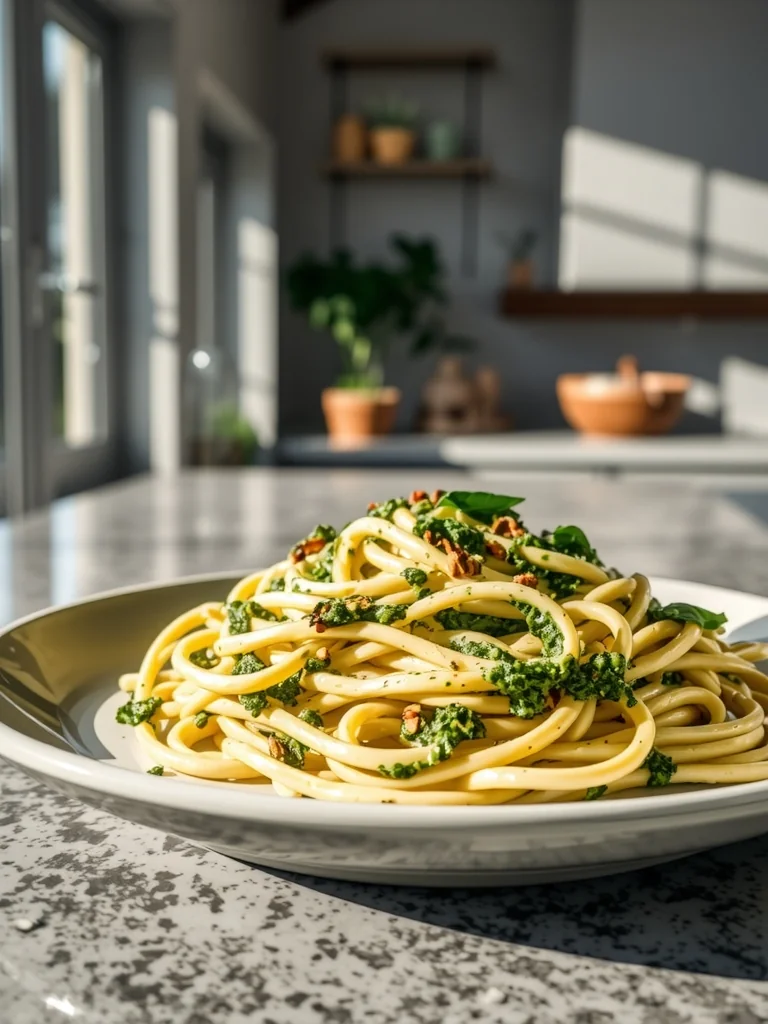
A velvety, herb‑kissed sauce that clings lovingly to each strand of pasta. Perfect for a calm evening, this creamy pesto blends fresh basil, toasted pine nuts, and a touch of garlic with a silky splash of cream, creating a comforting bite that sings of summer gardens and warm kitchens.
Timing
Prep Time
15 Minutes
Cook Time
20 Minutes
Total Time
35 Minutes
Recipe Details
Ingredients
Main Ingredients
- 01 12 oz pasta (such as linguine or penne)
- 02 2 cup fresh basil leaves, packed
- 03 1/3 cup pine nuts, toasted
- 04 2 cloves garlic, peeled
- 05 1/2 cup grated Parmesan cheese
- 06 1 cup heavy cream
- 07 2 tbsp extra‑virgin olive oil
- 08 1 tbsp lemon juice
- 09 Salt and freshly ground black pepper to taste
Instructions
Cook pasta in salted boiling water until al dente; reserve 1 cup of cooking water, then drain.
In a skillet, heat olive oil over medium heat, add garlic and sauté until fragrant, about 30 seconds.
Transfer basil, toasted pine nuts, garlic, and Parmesan to a food processor; pulse while slowly streaming in cream until smooth.
Add the creamy pesto sauce to the skillet, stir in lemon juice, and let it warm for 2 minutes.
Toss the hot pasta into the sauce, adding reserved pasta water a little at a time until the coating is glossy; season with salt and pepper, then serve immediately.
Notes & Tips
- 1 If the sauce thickens too quickly, a splash of the reserved pasta water will loosen it.
- 2 For extra nuttiness, sprinkle a few toasted pine nuts on top before serving.
- 3 A pinch of red pepper flakes adds a gentle warmth without overpowering the herbaceous flavor.
Tools You'll Need
-
Large pot for boiling pasta
-
Skillet
-
Food processor
-
Measuring cups and spoons
-
Tongs or pasta fork
Must-Know Tips
- Don’t over‑process the basil; a few flecks keep texture alive.
- Taste before adding salt; Parmesan already contributes saltiness.
- Use room‑temperature cream for a smoother blend.
Professional Secrets
- Toast pine nuts until golden for depth of flavor.
- Add lemon juice at the end to preserve its bright acidity.
- Reserve pasta water; its starch helps emulsify the sauce.

Recipe by
Sophia BennettSophia Bennett represents the artistic heart of sweet baking with her elegant cakes, delicate pastries, and celebration desserts. She enjoys crafting ...
Get Delicious Recipes Weekly
Join 25,000+ home cooks getting our best recipes straight to their inbox.
Free forever • No spam • Unsubscribe anytime