Why You'll Love It
- - Bright, garden‑fresh taste that lifts the spirit
- - Quick to assemble, perfect for busy evenings
- - Light yet satisfying, with wholesome nutrition
- - Minimal cleanup, just a few pans
*"The flavors are so bright, it feels like spring on a plate!"*
Essential Ingredient Guide
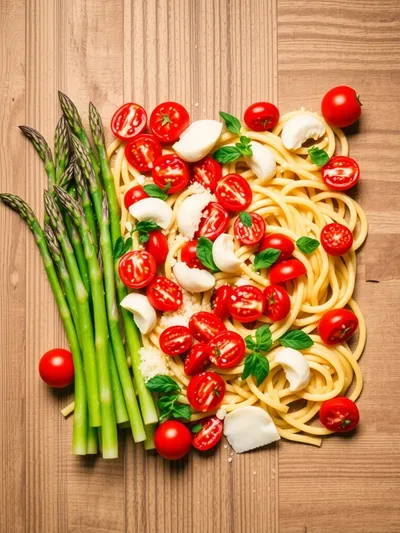
- Asparagus: Choose firm, bright green spears; trim the woody ends and slice into bite‑size pieces for even cooking.
- Ripe tomatoes: Cherry or grape tomatoes work best; halve them to release juices that form a natural sauce.
- Pasta: Use spaghetti or linguine; al dente texture provides the perfect bite and holds the light sauce.
- Garlic: Fresh cloves, minced, add aromatic depth without overpowering the vegetables.
- Lemon: A squeeze of lemon brightens the dish and balances the richness of olive oil.
- Parmesan: Finely grated, it adds salty umami and a silky finish.
Complete Cooking Process
-
Ingredient Readiness:
Wash and trim asparagus, halve tomatoes, mince garlic, and zest lemon before the pan heats up.
-
Flavor Development:
Sauté garlic gently, then add tomatoes so they soften and release their juices, creating a light glaze.
-
Texture Control:
Blanch asparagus briefly, then finish it in the pan so it stays bright and crisp.
-
Finishing Touches:
Toss cooked pasta with the vegetable mixture, finish with lemon zest, a drizzle of olive oil, and parmesan.
-
Serving Timing:
Serve immediately while the pasta is hot and the vegetables retain their snap.
- Reserve pasta water; a splash helps bind the sauce.
- Add asparagus at the last minute to preserve its color.
- Use a pinch of red pepper flakes for a subtle heat if desired.
Pro Tips
When you plate the pasta, take a moment to notice the glossy sheen of the olive‑oil glaze and the perfume of garlic mingling with fresh herbs. It’s those small sensory moments that make a simple dinner feel like a quiet celebration. I always let the dish rest a minute before serving, allowing the flavors to settle and the heat to mellow just enough for a comfortable bite.
The essence of the dish:
A fun fact or historical angle:
Flavor or sensory focus:
You Must Know
- Don’t overcook the asparagus – it loses its snap.
- Use pasta water to create a silky sauce.
- Season gradually; taste as you go.
Frequently Asked Questions
→ Can I use zucchini instead of asparagus?
Yes, slice zucchini thinly and sauté it briefly; it will offer a similarly tender bite.
→ What type of pasta works best?
Long, thin noodles like spaghetti or linguine allow the light sauce to cling evenly.
→ Is this recipe gluten‑free?
Swap regular pasta for your favorite gluten‑free variety; the flavors remain the same.
→ How do I store leftovers?
Place in an airtight container and refrigerate for up to two days; reheat gently with a splash of water.
→ Can I add protein?
Grilled chicken, shrimp, or even chickpeas make a hearty addition.
→ Is it suitable for vegans?
Omit the Parmesan or use a vegan alternative, and the dish stays delicious.
Chef's Tips
If the sauce seems dry, add a little more pasta water—just a splash at a time.,For extra brightness, drizzle a tiny drizzle of good quality olive oil just before serving.,Feel free to garnish with toasted pine nuts for added texture.
Nutrition Facts
per serving
420
Calories
12g
Protein
58g
Carbs
14g
Fat
Taste Profile
Bright, fresh, and lightly savory with a citrus lift
Ingredient Substitutions
Don't have an ingredient? Try these alternatives
Provides a similar salty depth without dairy.
Adjust cooking time according to package directions.
Recipe Variations
Try these delicious twists on the original
Spicy Version
Add a pinch of red pepper flakes or a dash of sriracha for a gentle heat.
Mediterranean Style
Stir in kalamata olives, crumbled feta, and a sprinkle of oregano.
Common Mistakes to Avoid
Learn from others' mistakes for perfect results
- Overcooking the asparagus, which turns mushy.
- Adding too much olive oil, making the dish greasy.
- Skipping the pasta water, resulting in a dry sauce.
Meal Prep & Storage
Make Ahead Tips
You can trim and slice the asparagus and halve the tomatoes up to 24 hours ahead; store them in airtight containers in the refrigerator.
Leftover Ideas
Reheat gently in a skillet with a splash of water or broth, adding a touch more olive oil to revive the glaze.
Perfect Pairings
Serve this with...
Cooking Timeline
Boil water, cook pasta, and reserve cooking water.
Sauté garlic, add tomatoes, then asparagus; stir until softened.
Combine pasta with vegetables, add lemon zest, juice, and pasta water; finish with cheese.
Season, garnish with basil, and serve immediately.
Asparagus Tomato Pasta – Easy Fresh Pasta Recipe
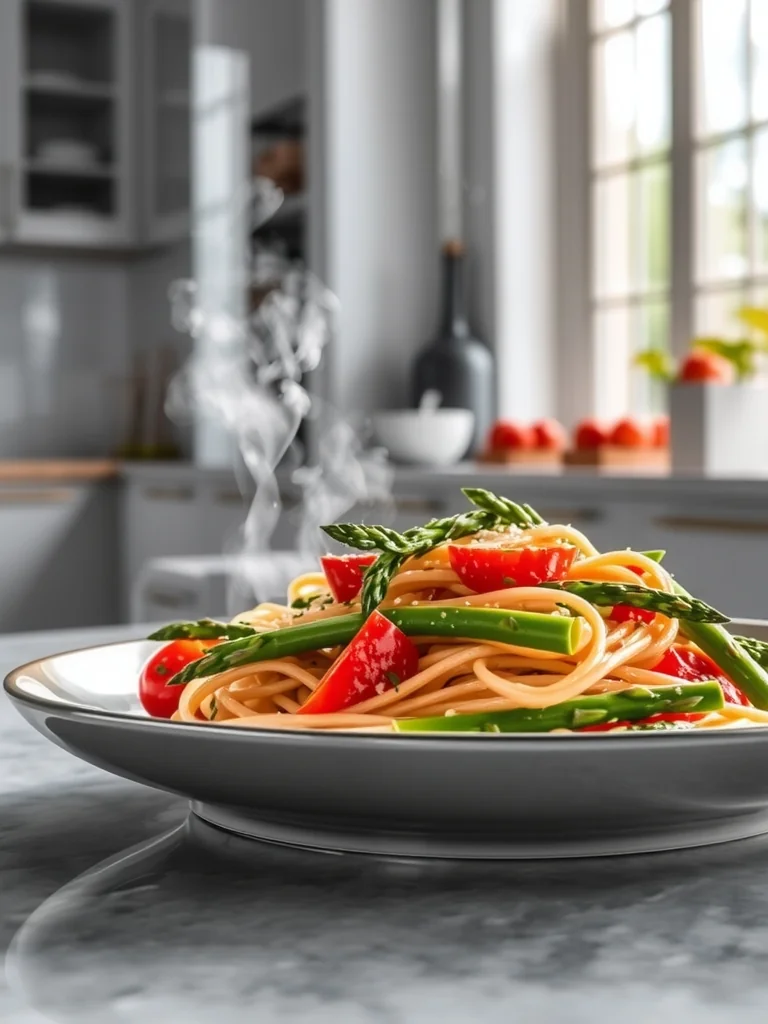
Enjoy a bright, healthy Asparagus Tomato Pasta tossed with crisp veggies, garlic, and al dente noodles for a quick weeknight dinner. The dish feels like a gentle spring breeze, with the snap of asparagus and the sweet pop of tomatoes, all cloaked in a light olive‑oil glaze.
Timing
Prep Time
15 Minutes
Cook Time
20 Minutes
Total Time
35 Minutes
Recipe Details
Ingredients
Main Ingredients
- 01 12 oz spaghetti or linguine
- 02 1 bunch asparagus, trimmed and cut into 1‑inch pieces
- 03 2 cups cherry tomatoes, halved
- 04 3 cloves garlic, minced
- 05 2 tbsp extra‑virgin olive oil
- 06 Zest of 1 lemon
- 07 Juice of 1/2 lemon
- 08 1/4 cup grated Parmesan cheese
- 09 Fresh basil leaves, torn
- 10 Salt and freshly cracked black pepper to taste
For the Light Sauce
- 01 1/4 cup pasta cooking water (reserved)
- 02 Optional pinch red pepper flakes
Instructions
Bring a large pot of salted water to a boil; cook the pasta until al dente, then reserve 1/4 cup of the cooking water before draining.
While the pasta cooks, heat olive oil in a large skillet over medium heat. Add minced garlic and a pinch of red pepper flakes, stirring gently until fragrant—about 30 seconds.
Add the tomato halves, allowing them to soften and release juices, stirring occasionally for 3‑4 minutes. Then stir in the asparagus pieces, cooking just until they turn bright green and stay crisp, about 2 minutes.
Toss the drained pasta into the skillet, pour in the reserved pasta water, lemon zest, and lemon juice. Mix everything together until the sauce coats each strand, then finish with grated Parmesan and fresh basil.
Season with salt and pepper to taste, give one last gentle toss, and serve immediately, enjoying the aromatic warmth.
Notes & Tips
- 1 If the sauce seems dry, add a little more pasta water—just a splash at a time.
- 2 For extra brightness, drizzle a tiny drizzle of good quality olive oil just before serving.
- 3 Feel free to garnish with toasted pine nuts for added texture.
Tools You'll Need
-
Large pot
-
Colander
-
Large skillet
-
Sharp knife
-
Cutting board
-
Wooden spoon
Must-Know Tips
- Don’t overcook the asparagus; it should stay crisp.
- Reserve pasta water; it helps bind the light sauce.
- Taste and adjust seasoning at the end for balanced flavor.
Professional Secrets
- Cook pasta slightly under for better texture once combined with sauce.
- Sauté garlic on low heat to avoid bitterness.
- Add lemon zest at the end for a fresh aromatic lift.

Recipe by
Sophia BennettSophia Bennett represents the artistic heart of sweet baking with her elegant cakes, delicate pastries, and celebration desserts. She enjoys crafting ...
Get Delicious Recipes Weekly
Join 25,000+ home cooks getting our best recipes straight to their inbox.
Free forever • No spam • Unsubscribe anytime